What Is Generative AI? Meaning, How It Works, and Real-World Applications
Generative Artificial Intelligence (Generative AI) has rapidly moved from a research concept into a core business technology. From generating human-like text and images to writing code, analyzing data, and automating complex workflows, generative AI is reshaping how organizations operate, innovate, and compete.
If you’ve heard terms like ChatGPT, AI image generators, or AI copilots and wondered what generative AI actually is, how it works, and why businesses are investing in it, this guide is for you. This article explains generative AI in clear, practical language—covering its foundations, underlying technologies, real-world applications, benefits, challenges, and what the future holds.
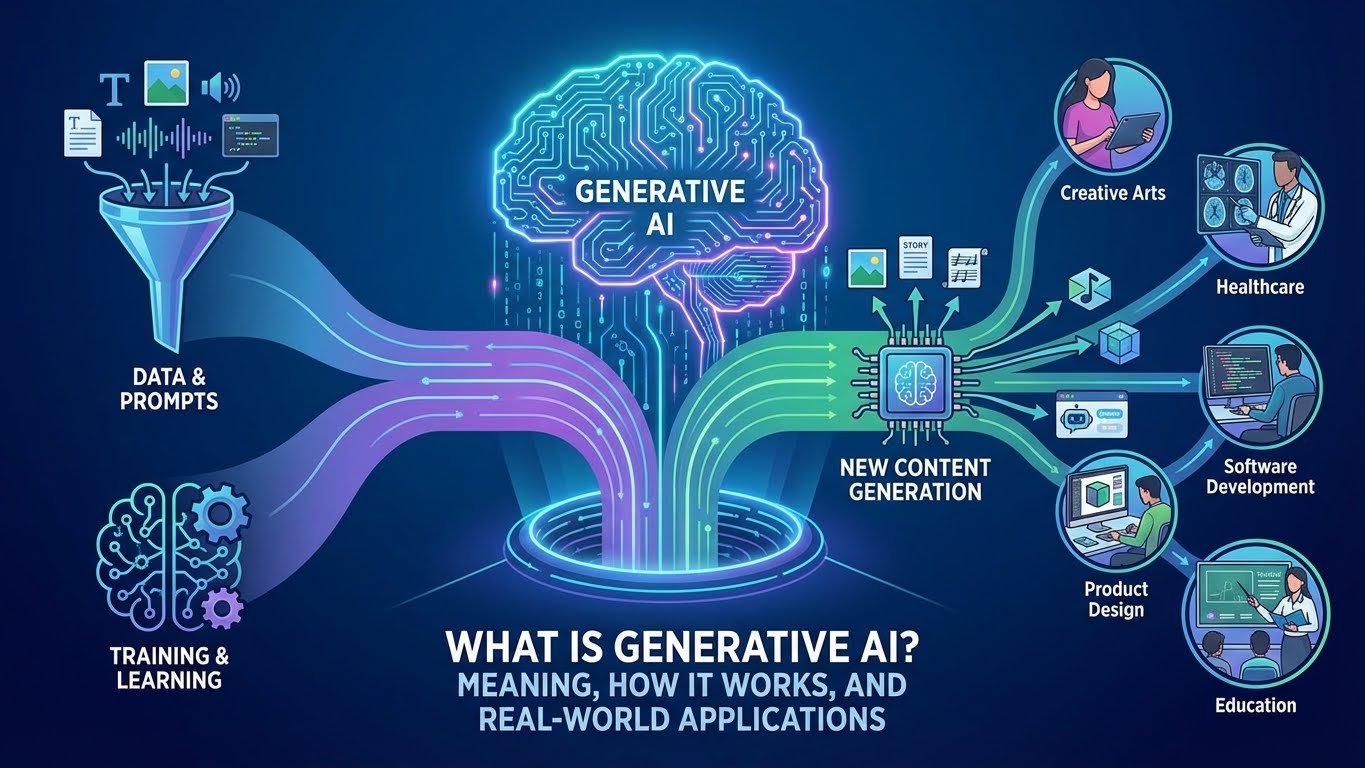
What Is Generative AI?
Generative AI is a branch of artificial intelligence focused on creating new content rather than simply analyzing or classifying existing data. This content can include:
Text (articles, emails, summaries, chat responses)
Images (designs, illustrations, product visuals)
Audio (voice, music, sound effects)
Video (short clips, animations)
Code (software functions, scripts, tests)
Structured data (reports, insights, synthetic datasets)
In simple terms, generative AI learns patterns from large datasets and then generates new outputs that resemble human-created content.
Unlike traditional AI systems that follow strict rules or make predictions based on predefined outcomes, generative AI can produce original responses—making it far more flexible and powerful for modern use cases.
In today’s highly competitive business environment, cost efficiency is no longer just about cutting expenses—it’s about working smarter, faster, and at scale. This is where AI automation is transforming how modern businesses operate.
From customer support and sales to operations, HR, and marketing, organizations across industries are adopting AI-powered automation to reduce operational costs, improve efficiency, and increase profitability—without compromising quality or customer experience.
This article explores how businesses are using AI automation to reduce costs, where the biggest savings come from, real-world outcomes companies are seeing, and why decision-makers are increasingly investing in AI-driven solutions.
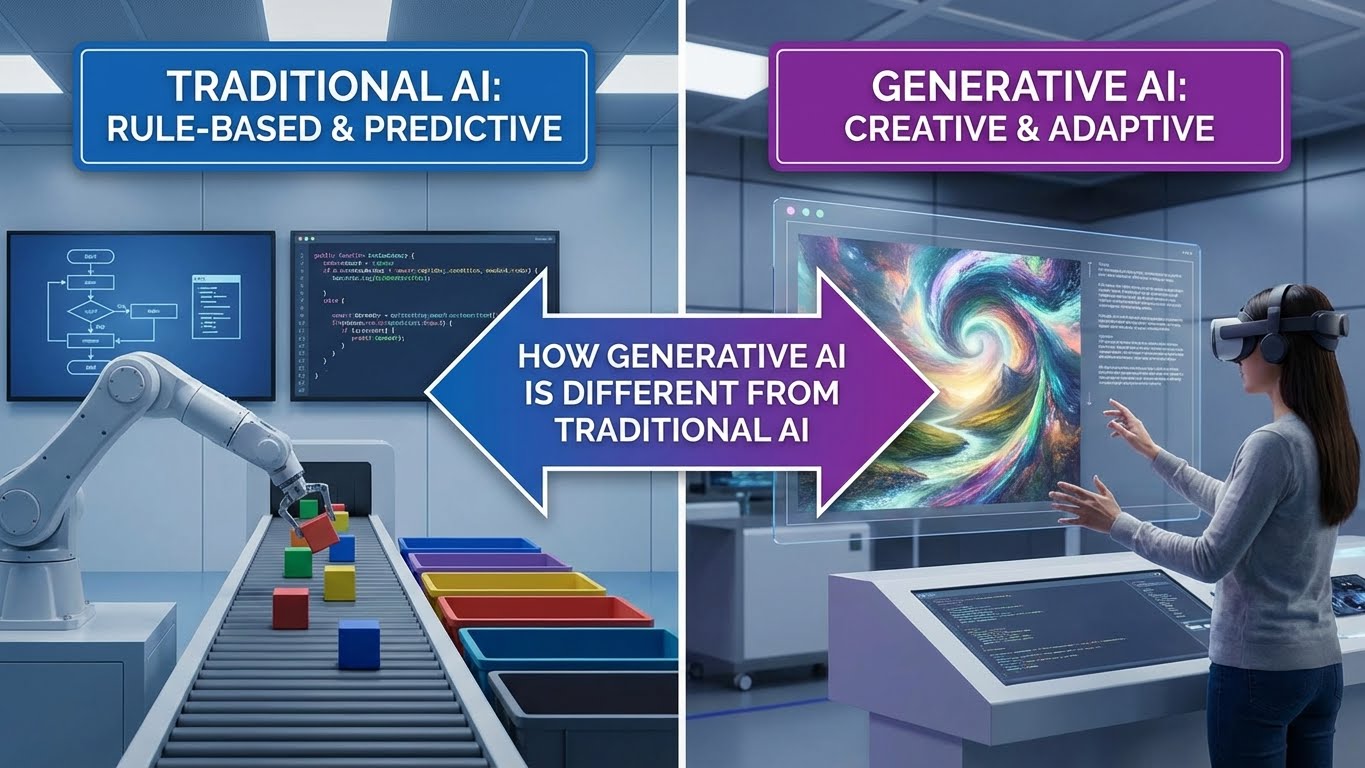
How Generative AI Is Different from Traditional AI
To fully understand what generative AI is, it helps to compare it with traditional AI.
Traditional AI (Analytical AI)
Traditional AI systems are designed to:
Classify data (spam vs non-spam)
Predict outcomes (sales forecasting)
Recognize patterns (fraud detection, image recognition)
These systems answer questions like:
Is this transaction fraudulent?
Will this customer churn?
What is in this image?
Generative AI
Generative AI, on the other hand, is designed to:
Create new content
Generate responses in natural language
Produce creative and contextual outputs
It answers questions like:
Write a professional email for this scenario
Generate a product description
Create an image based on a text prompt
Explain this complex topic in simple terms
This shift—from predicting to creating—is what makes generative AI transformational.
What Is AI Automation?
AI automation combines artificial intelligence with business process automation to perform tasks that traditionally required human effort—but faster, more accurately, and at a significantly lower cost.
Unlike basic rule-based automation, AI automation can:
Understand natural language
Learn from historical and real-time data
Make contextual decisions
Improve performance continuously over time
This makes AI automation ideal for high-volume, repetitive, and time-consuming processes where manual execution becomes expensive, slow, and error-prone.
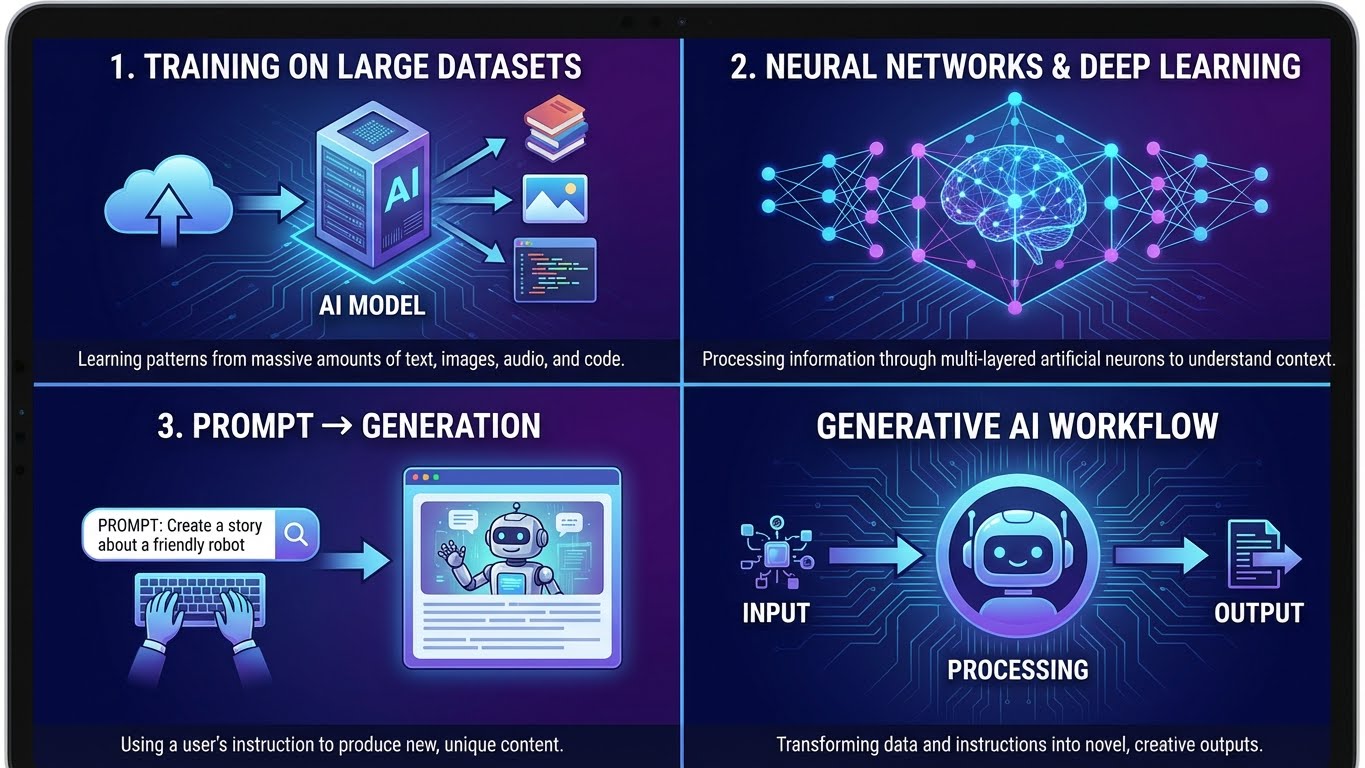
How Does Generative AI Work?
Understanding how generative AI works doesn’t require a deep technical background. At a high level, it relies on machine learning models trained on massive datasets.
1. Training on Large Datasets
Generative AI models are trained on enormous volumes of data, such as:
Text from books, articles, websites, and documentation
Images and videos
Code repositories
Audio and speech samples
During training, the model learns:
Language structure and grammar
Relationships between words, images, or patterns
Context, tone, and intent
2. Neural Networks and Deep Learning
Most generative AI systems use deep learning neural networks, particularly transformer-based architectures. These models learn complex relationships between data points and can understand long-range context.
Instead of memorizing content, the model learns probability distributions—predicting what comes next based on context.
3. Prompt → Generation
When a user provides a prompt (text, image, or instruction), the model:
Interprets the input
Applies learned patterns
Generates a response that best fits the context
The quality of output depends on:
Model size and training quality
Prompt clarity
Fine-tuning and guardrails
Why Businesses Are Investing in AI Automation
The shift toward AI-driven business automation is driven by clear, measurable outcomes:
Rising labor and operational costs
Increasing customer expectations for speed and availability
Pressure to scale operations without expanding teams
Growing need for real-time, data-driven decision-making
For business leaders, AI automation is no longer an experiment—it’s a proven cost-reduction and growth strategy with predictable ROI.
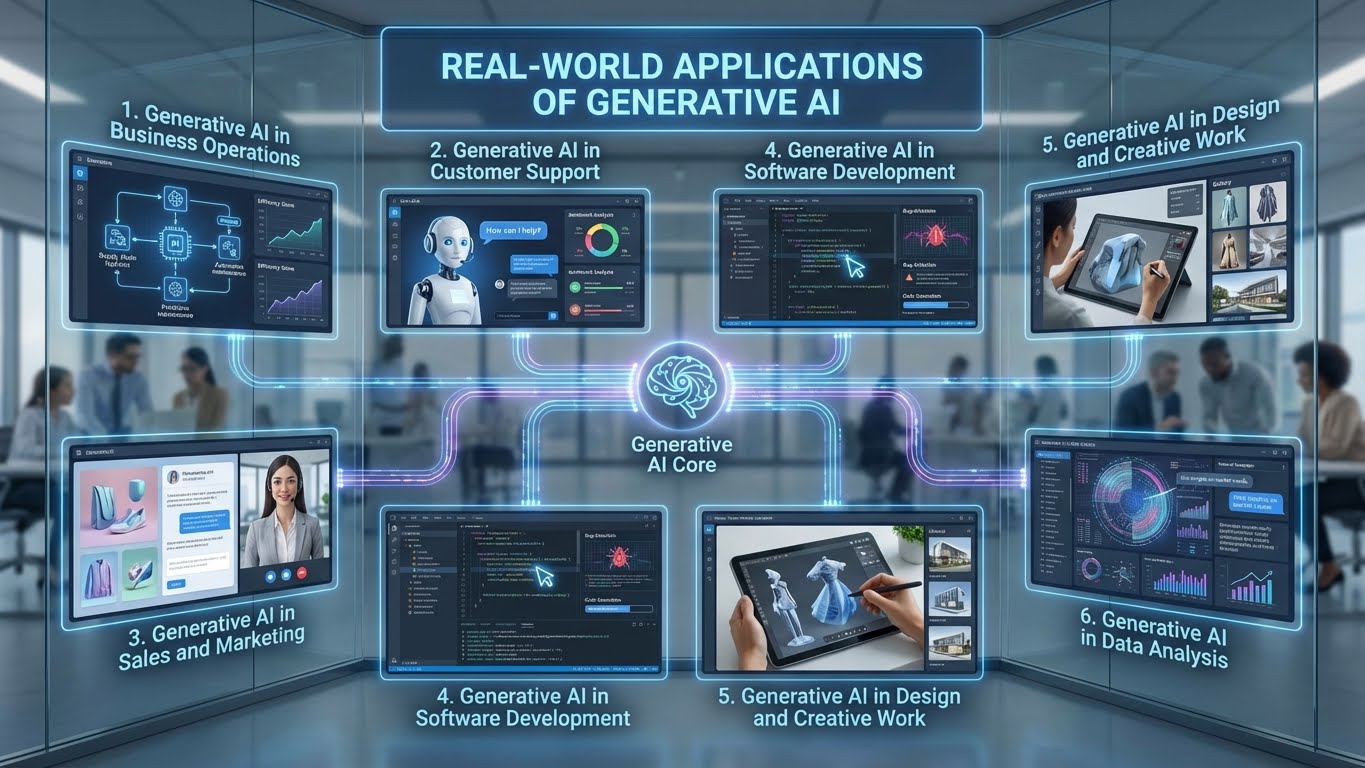
Real-World Applications of Generative AI
One of the biggest reasons people ask what generative AI is to understand how it’s used in practice. Below are the most impactful real-world applications.
1. Generative AI in Business Operations
Businesses use generative AI to automate and optimize everyday tasks such as:
Email drafting and summarization
Report generation
Meeting notes and documentation
Internal knowledge assistance
This reduces manual effort and improves productivity across teams.
2. Generative AI in Customer Support
Generative AI powers:
AI chatbots and voice agents
Automated responses to common queries
Ticket summarization and routing
Benefits include:
24/7 availability
Faster response times
Lower operational costs
Consistent customer experience
3. Generative AI in Sales and Marketing
Marketing and sales teams use generative AI for:
Content creation (blogs, ads, emails)
Personalized messaging
Lead qualification conversations
Campaign ideation
This helps teams scale outreach without increasing headcount.
4. Generative AI in Software Development
Developers use generative AI to:
Generate code snippets
Write unit tests
Refactor legacy code
Explain complex logic
This accelerates development cycles and improves code quality.
5. Generative AI in Design and Creative Work
Designers leverage generative AI for:
Image creation
UI/UX mockups
Branding concepts
Video and animation ideation
Generative AI acts as a creative assistant rather than a replacement.
6. Generative AI in Data Analysis
Generative AI can:
Summarize large datasets
Generate insights in natural language
Create synthetic data for testing
This makes data more accessible to non-technical stakeholders.
Key Areas Where AI Automation Reduces Costs
1. Customer Support Automation
Customer support is one of the largest recurring cost centers for many businesses. AI automation significantly reduces these costs by handling routine interactions automatically.
How businesses use it:
AI chatbots for FAQs and issue resolution
AI voice agents to handle inbound calls
Automated ticket categorization, routing, and prioritization
Cost impact:
Fewer human agents required for repetitive queries
Reduced average handling time
24/7 support without overtime or shift costs
Real impact: Many businesses report a 30–60% reduction in customer support costs after implementing AI automation for first-level interactions.
2. Sales & Lead Qualification Automation
Sales teams often spend valuable time chasing unqualified leads and managing manual follow-ups. AI automation removes this inefficiency.
How businesses use it:
AI calling agents for outbound lead qualification
Automated follow-up calls, reminders, and nurturing
AI-driven lead scoring and intelligent routing
Cost impact:
Reduced cost per lead
Higher conversion rates
Sales teams focus only on high-intent prospects
The result is lower customer acquisition costs (CAC) and shorter sales cycles.
3. Operations & Process Automation
Internal operations are full of repetitive workflows that quietly drain time, money, and resources. AI-powered process automation eliminates these hidden costs.
Common use cases include:
Invoice processing and data extraction
Document classification and validation
Workflow approvals with AI-based decision-making
Cost impact:
Fewer manual errors and rework
Faster processing times
Reduced dependency on large operations teams
Organizations often achieve major reductions in processing costs while improving accuracy and turnaround time.
4. HR & Recruitment Automation
Hiring and HR operations typically involve high manual effort, long cycle times, and administrative overhead.
How AI automation helps:
Resume screening and candidate shortlisting
Automated interview scheduling and coordination
Employee query handling via AI assistants
Cost impact:
Shorter recruitment cycles
Lower HR operational costs
More consistent and unbiased hiring processes
HR teams can focus on strategy, culture, and retention instead of administration.
5. Marketing Automation with AI
Marketing budgets are often wasted on poorly targeted campaigns. AI automation ensures marketing spend delivers measurable returns.
Common applications:
AI-driven ad optimization and bidding
Personalized email and messaging campaigns
Predictive customer segmentation and targeting
Cost impact:
Higher ROI on ad spend
Reduced manual campaign management
Improved engagement and conversion rates
AI ensures marketing budgets are allocated where performance is strongest.
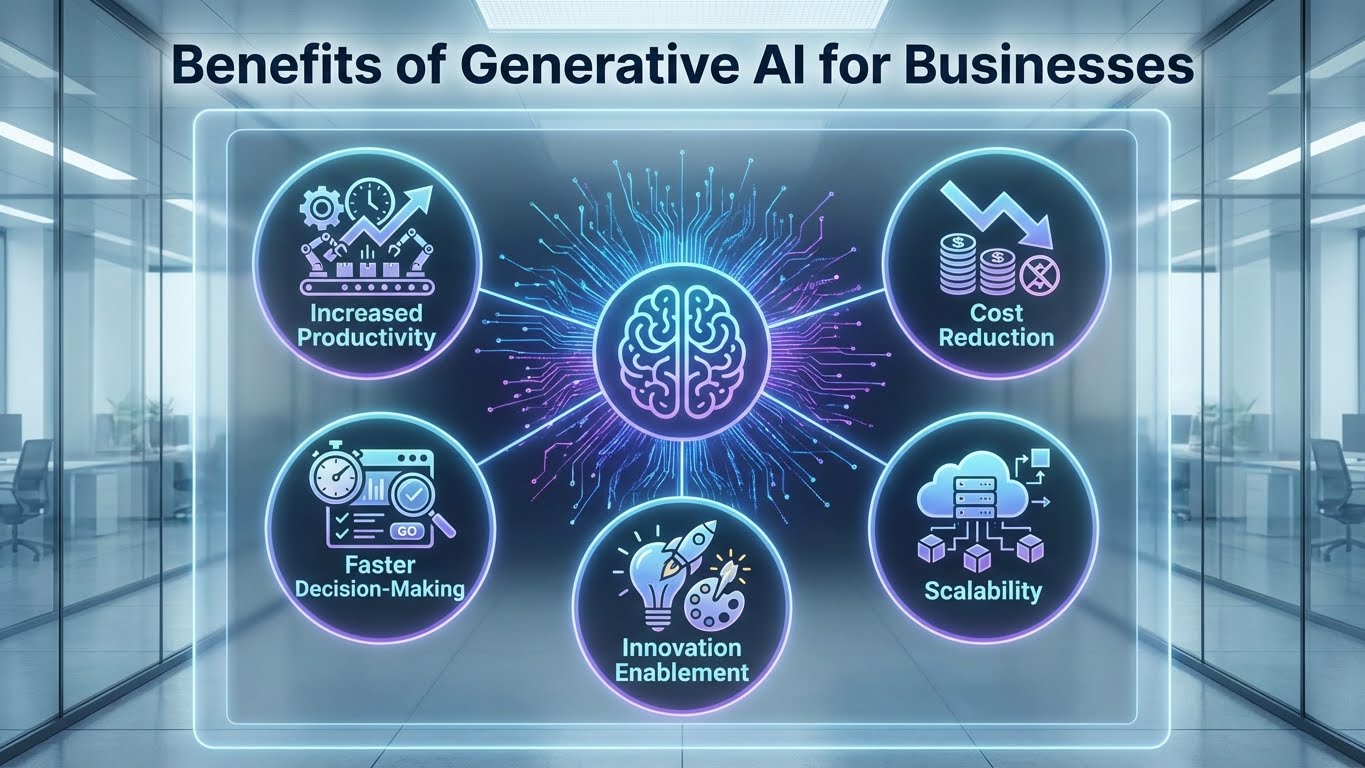
Benefits of Generative AI for Businesses
Organizations investing in generative AI typically see value in the following areas:
Increased Productivity
Automating repetitive tasks frees employees to focus on higher-value work.
Cost Reduction
Generative AI reduces reliance on manual labor for content, support, and analysis.
Faster Decision-Making
AI-generated summaries and insights speed up decision cycles.
Scalability
Businesses can scale operations without proportionally increasing costs.
Innovation Enablement
Teams can experiment, prototype, and innovate faster using AI assistance.
Real Cost Savings: What Businesses Are Actually Seeing
Organizations that successfully adopt AI automation commonly experience:
20–40% reduction in overall operational costs
Lower staffing requirements for repetitive tasks
Faster response times and higher customer satisfaction
Scalable operations without linear cost growth
Real-world example:
A mid-sized service business handling over 1,000 customer calls per month reduced support costs by 45% after deploying AI voice automation for first-level queries — while improving response times and customer satisfaction.
Importantly, these savings are ongoing, not one-time.

Challenges and Limitations of Generative AI
Despite its benefits, generative AI also comes with challenges that organizations must address.
Accuracy and Hallucinations
Generative AI can sometimes produce incorrect or misleading information if not properly guided.
Data Privacy and Security
Training and usage must comply with data protection and compliance standards.
Bias and Ethics
Models can reflect biases present in training data, requiring monitoring and governance.
Integration Complexity
Deploying generative AI into existing systems requires technical planning and expertise.
AI Automation vs Hiring More Staff
Many businesses face a familiar decision:
Hire more people — or automate intelligently?
Hiring Staff AI Automation
Linear Fixed+scalable
Limited hours 24/7
Dependent Consistent
Slow Instant
This is why AI automation is increasingly viewed as a long-term competitive advantage, not just a technology upgrade.
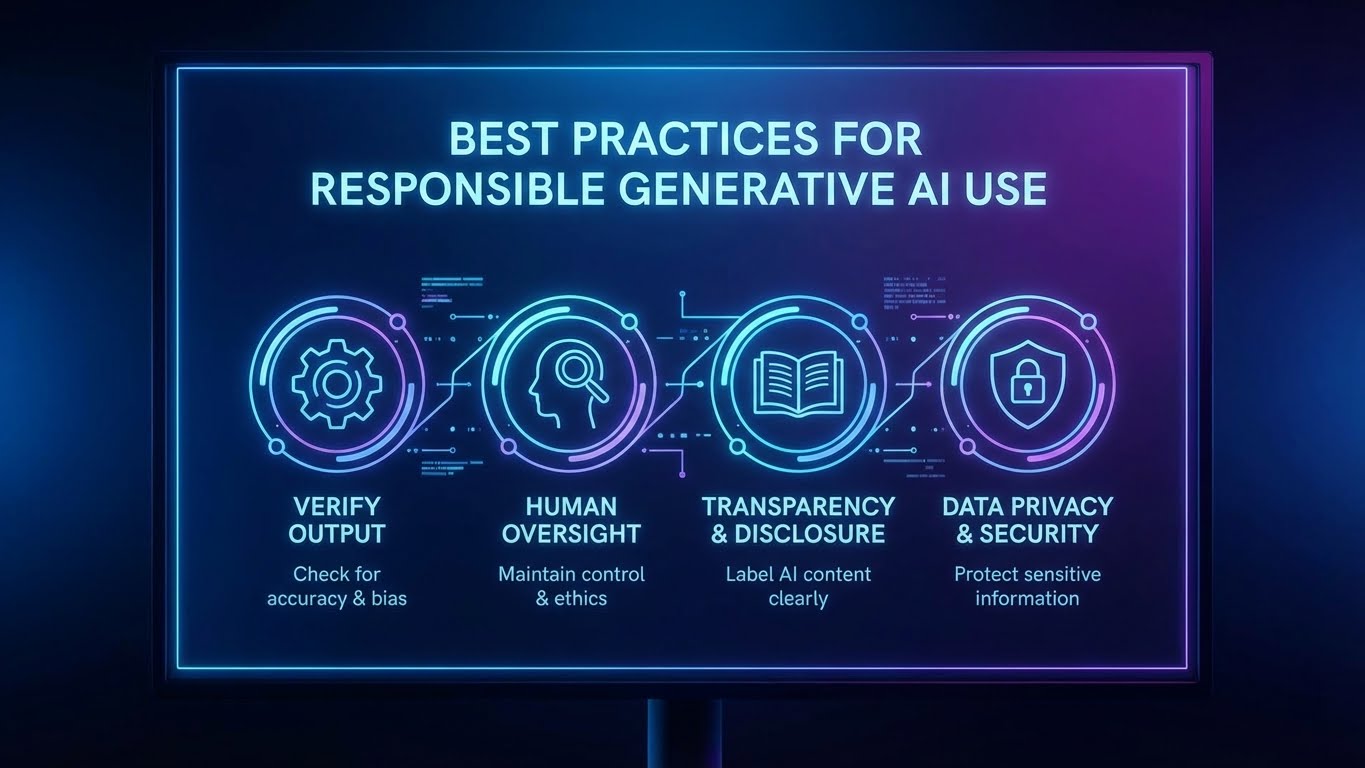
Best Practices for Using Generative AI Responsibly
To maximize value and minimize risk:
Use human review for critical outputs
Implement guardrails and validation
Fine-tune models for domain-specific use cases
Ensure transparency in AI-generated content
Align AI usage with business goals
Industries Benefiting the Most from AI Automation
AI automation delivers strong ROI across industries such as:
Customer support & call centers
Real estate & property management
Healthcare & clinics
Insurance & financial services
E-commerce & retail
Logistics & service-based businesses
Any industry with high interaction volume or repetitive workflows can benefit significantly.
The Future of Generative AI
Generative AI is evolving rapidly. Key trends include:
More accurate and smaller models
Deeper integration into enterprise software
Industry-specific AI agents
Multimodal AI becoming standard
Stronger regulation and governance
In the coming years, generative AI will become less of a standalone tool and more of an embedded capability across digital systems.
Common Concerns About AI Automation (And the Reality)
“AI will replace humans”
Reality: AI automation augments teams, allowing humans to focus on complex, high-value work.
“AI is expensive”
Reality: AI automation often costs less than hiring 1–2 full-time employees, while delivering higher output.
“Implementation is complex”
Reality: Modern AI solutions are quick to deploy, integrate easily, and require minimal training.

Final Thoughts: AI Automation Is a Competitive Advantage
AI automation is no longer optional for cost-conscious businesses. It’s a strategic advantage that enables organizations to:
Reduce operational expenses
Scale without increasing headcount
Improve customer experience
Compete effectively in fast-moving markets
Businesses that adopt AI automation early gain a compounding cost advantage, while late adopters struggle to compete on speed, margins, and efficiency.
For decision-makers, the question is no longer if AI automation should be adopted—but how fast.
Final Thoughts: AI Automation Is a Competitive Advantage
AI automation is no longer optional for cost-conscious businesses. It’s a strategic advantage that enables organizations to:
Reduce operational expenses
Scale without increasing headcount
Improve customer experience
Compete effectively in fast-moving markets
Businesses that adopt AI automation early gain a compounding cost advantage, while late adopters struggle to compete on speed, margins, and efficiency.
For decision-makers, the question is no longer if AI automation should be adopted—but how fast.
Frequently Asked Questions
Here are answers to some frequently asked questions. If your question isn’t listed, please contact us. We’re happy to assist!
1.
What is generative AI?
1.
What is generative AI?
2.
How does generative AI work?
2.
How does generative AI work?
3.
Where is this technology used in real life?
3.
Where is this technology used in real life?
4.
What benefits does it offer to businesses?
4.
What benefits does it offer to businesses?
5.
What are its main limitations?